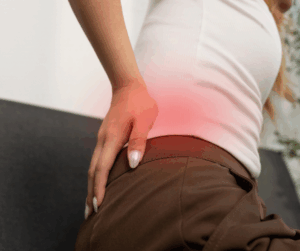


Sciatic pain often feels different from common back soreness. Many people struggle to describe it at first because the pain changes based on movement, posture, and daily habits. Understanding how sciatic pain shows up day to day helps people decide when care makes sense.
How sciatic pain usually starts
Sciatic pain often begins in the lower back or deep in one hip. The discomfort then travels down one side of the body, following the path of the sciatic nerve. Some people notice the pain gradually. Others feel it suddenly after sitting, driving, or standing up.
The pain rarely stays in one spot. Movement tends to shift the sensation, which separates sciatic pain from muscle strain.
Common sensations people report
People describe sciatic pain in several ways. Sharp or burning pain that moves down the leg
A deep ache in the hip or thigh
Tingling or pins and needles in the leg or foot
Numbness in the calf, ankle, or toes
Symptoms often come and go throughout the day. Pain intensity changes with posture and activity.
Daily activities that worsen sciatic pain
Certain routines increase pressure on the sciatic nerve.
Sitting for long periods
Driving for extended time
Standing up after sitting
Bending or twisting quickly
Many people notice pain increases later in the day after hours of limited movement.
Signs pain is more than muscle soreness
Muscle soreness usually stays near the lower back and improves with light movement. Sciatic pain behaves differently.
Pain travels below the knee
Numbness or tingling appears
Pain returns repeatedly
One side of the body feels weaker
These signs often point toward nerve involvement rather than muscle fatigue.
When sciatic pain affects daily life
Sciatic pain interferes with sleep, work, and simple tasks. People struggle with sitting comfortably, standing for long periods, or completing daily routines without discomfort.
Ignoring symptoms often leads to recurring flare ups. Early evaluation helps address the cause and reduces the chance of long term irritation.
Frequently asked questions
What does sciatic pain feel like compared to back pain
Sciatic pain travels down the leg and includes nerve sensations such as tingling or numbness. Back pain usually stays localized and feels sore or stiff.
Does sciatic pain stay constant all day
Symptoms often fluctuate. Pain changes with posture, sitting time, and daily movement patterns.
Why does sciatic pain worsen while sitting
Sitting increases pressure on the lower spine and hips, which places added strain on the sciatic nerve.
Does sciatic pain always involve leg pain
Most cases involve leg symptoms, though early irritation sometimes starts in the lower back or hip.
When should sciatic pain be evaluated
Pain lasting more than a few days, recurring flare ups, or symptoms affecting sleep and daily activity often benefit from professional evaluation.
If pain travels down your leg, returns repeatedly, or interferes with daily movement, scheduling an evaluation helps identify the source and create a plan focused on relief and mobility. Contact our office to book an appointment and take the next step toward feeling comfortable again.